
How to Budget for a Home Renovation in Houston: Key Costs to Consider
Learning how to budget for a home renovation starts with more than picking a number and browsing finishes; it requires...
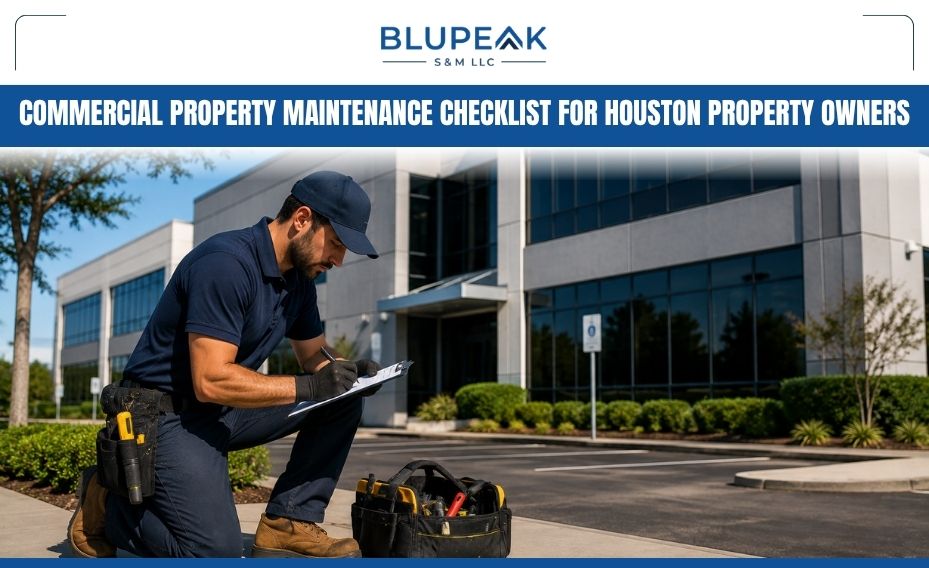
A commercial property maintenance checklist helps Houston property owners find small problems before they become tenant complaints, safety concerns, water damage, or expensive disruptions.
In this climate, heat, humidity, intense rain, and storms can expose weaknesses in roofs, drainage, sealants, exterior finishes, concrete, and occupied interior spaces quickly. commercial property maintenance checklist should be tied to the actual scope and conditions.
The most useful checklist is not a form that gets completed and forgotten. It is a repeatable process for inspecting the property, recording conditions, prioritizing repairs, and coordinating work around tenants and daily operations.
This guide explains what to review monthly, how to plan seasonal property maintenance, and when commercial property maintenance services from a qualified contractor can make the process easier to manage.
A commercial property maintenance checklist should cover the building exterior, interior finishes, site conditions, visible safety concerns, and the operating realities of the property. Good planning keeps the commercial property maintenance checklist aligned with the property’s daily needs, including work handled by a concrete contractor in houston.
The exact list will vary by building type, age, occupancy, equipment, lease responsibilities, and site conditions, but the goal is consistent: identify deterioration early and assign each issue a clear next step.
A useful inspection separates three types of work. Routine maintenance keeps an asset in service, corrective repair addresses an existing defect, and capital improvement replaces or upgrades an aging component.
Confusing these categories can cause budget problems. For example, touching up a small area of damaged paint may be routine work, while recurring moisture behind that paint may require an exterior or envelope investigation.
Walk the property perimeter rather than inspecting only the front entrance. Look for cracked or displaced concrete, damaged curbs, deteriorated sealants, loose siding or trim, bent fencing, damaged doors, broken hardware, and gaps around windows or other openings.
These conditions can affect appearance, security, water resistance, and accessibility. These decisions can affect the cost and schedule of commercial property maintenance checklist.
Roof observations should be handled carefully and safely. Look for interior staining, ceiling discoloration, musty odors, ponding visible from safe locations, damaged roof-edge components, and signs that water is entering around penetrations or openings.
A visual checklist is not a substitute for a qualified roof assessment, and no one should access a roof area without appropriate safety procedures.
Drainage deserves special attention in Houston. Check whether water is moving away from the building, whether downspouts or visible drainage paths are obstructed, and whether soil, pavement, or landscaping changes are directing water toward walls or entrances. The scope should explain how commercial property maintenance checklist will be coordinated.
Recurring interior leaks are sometimes caused by conditions outside the room where the damage appears.
Site maintenance may also include parking lot condition, pavement markings, fire lane striping, loading areas, exterior lighting observations, dumpster enclosures, gates, and pedestrian routes.
Striping should remain visible and functional, but property owners should verify applicable requirements with the appropriate local authority when markings relate to fire access or other regulated conditions. Including Facade Restoration in the commercial property maintenance checklist can also help address exterior deterioration, maintain the buildingâs appearance, and reduce avoidable disruption through early planning.
Inside the building, inspect the areas that tenants, employees, customers, and visitors use most. Check ceilings for staining or displaced tiles, walls for cracks or impact damage, floors for worn or loose surfaces, and doors for alignment, damaged closers, or hardware problems.
Restrooms, corridors, lobbies, break rooms, and high-traffic entrances often reveal wear before less-used areas do.
Common commercial property maintenance services may include commercial painting, drywall repair, flooring, tile, cabinet work, ceiling grid and tile repair, access panel installation, and other finish-related repairs. Clear priorities make commercial property maintenance checklist easier to manage from the start.
These items can look cosmetic, but they often affect operations. A damaged ceiling tile may point to a leak. A loose floor transition can create a trip hazard. A missing access panel can make future servicing more difficult and leave an opening that should be addressed.
Visible pipe insulation should also be reviewed where it is exposed or damaged. Deteriorated insulation can contribute to condensation concerns, energy loss, or premature wear, depending on the system and conditions.
Work involving plumbing, electrical systems, HVAC equipment, or other building systems should be evaluated and performed according to the applicable technical requirements and qualified trade practices.
A maintenance inspection should record conditions that could affect safe movement or normal business activity. Examples include uneven walking surfaces, blocked exits or routes, damaged handrails, poor visibility in marked areas, water on floors, unsecured materials, and doors that do not operate as intended.
The right approach to commercial property maintenance checklist starts with site-specific information.
The purpose is not to declare a property compliant with every code or regulation. Requirements can vary by occupancy, jurisdiction, building configuration, landlord standards, and the authority having jurisdiction.
Instead, the checklist gives the owner a documented way to identify concerns and determine whether a qualified specialist, property manager, landlord, engineer, or public authority needs to be involved.
For occupied commercial properties, also note operational effects. Is a repair blocking a tenant entrance? Does work create dust near merchandise or food service? A written plan gives commercial property maintenance checklist clearer decisions and fewer surprises.
Will a lift, truck, or material staging affect parking? These questions belong in maintenance planning because a technically sound repair can still create avoidable disruption if access and communication are ignored.
Monthly property maintenance tasks should be consistent enough to reveal changes over time. The person performing the walkthrough does not need to diagnose every defect, but should record what changed, where it occurred, and how quickly it appears to be worsening.
Photographs from the same general viewpoints can make comparisons much easier. commercial property maintenance checklist should be tied to the actual scope and conditions.
The best maintenance programs combine a regular walkthrough with a method for receiving and closing tenant or employee reports. A ceiling stain noticed by a tenant may be more useful than a checklist completed during a dry week because it identifies a problem under actual operating conditions.
After rain, review areas where water commonly collects or enters: roof edges, wall penetrations, door thresholds, windows, low points in parking areas, loading zones, and interior ceilings below roof or plumbing areas. Document staining, active dripping, damaged finishes, odors, damp materials, and any area that has been repeatedly repaired. Regular inspections can also help identify exterior deterioration that may require Facade Restoration. For properties with perimeter security needs, inspect the condition of the Anti Climb Fence to ensure it remains secure and functional.
Do not assume that repainting a stain solves the problem. If moisture remains active, a new coating may conceal evidence while damage continues behind the finish. Good planning keeps commercial property maintenance checklist aligned with the property’s daily needs.
The better approach is to control the immediate risk, determine whether the source is roof-related, plumbing-related, condensation-related, or caused by exterior drainage, and then repair the source before restoring damaged finishes.
Check visible gutters, downspouts, drains, and drainage paths where the property design includes them. Obstructions and displaced components should be addressed using the appropriate maintenance method. If drainage behavior has changed because of settlement, paving, construction, or landscaping, a larger site correction may be needed rather than another temporary cleanup.
Entries, corridors, elevators or elevator lobbies, restrooms, stair areas, shared kitchens, parking routes, and delivery paths deserve recurring attention. Look for worn flooring, chipped paint, damaged wall corners, loose trim, ceiling tile damage, water near entrances, and hardware that receives heavy daily use. For properties with shared or commercial kitchens, kitchen remodeling in houston may also be considered when existing layouts, finishes, or fixtures require upgrades.
Tenant communication is part of the inspection process. Ask whether occupants have noticed recurring temperature complaints, leaks, odors, door problems, lighting concerns, noise, or access issues.
Repeated reports often identify a pattern that is difficult to see during a short visit. These decisions can affect the cost and schedule of commercial property maintenance checklist.
Prioritize conditions by consequence rather than appearance alone. An unattractive wall may be scheduled with other painting work, while a wet floor, deteriorating entry surface, or blocked route may require faster attention.
A property manager should also confirm who is responsible under the lease before authorizing work, particularly in multi-tenant buildings.
A maintenance log should include the date, location, observed condition, photographs, temporary action, recommended next step, person responsible, and completion status.
It should also note whether the issue returned after repair. This record helps owners identify recurring failures and plan budgets with better information. The scope should explain how commercial property maintenance checklist will be coordinated.
For example, repeated ceiling tile replacement in the same area may indicate unresolved roof, plumbing, or condensation issues.
Repeated patching of a parking surface may indicate settlement or drainage problems. Repainting the same wall every few months may point to water intrusion, impact from equipment, or a layout issue that needs a more durable solution.
A practical monthly review can group findings into three categories: Early review can keep commercial property maintenance checklist from creating avoidable disruption.
This approach gives owners a defensible reason for prioritizing work instead of reacting to whichever complaint arrives first.
Seasonal property maintenance in Houston should respond to weather exposure and building use rather than follow a rigid calendar. Heavy rain may reveal drainage or roof problems, prolonged heat can stress exterior materials and sealants, and humidity can make moisture-related issues more persistent.
The right schedule depends on the property, but a seasonal review adds important context to the monthly walkthrough.
Before a period of severe weather, review visible roof-edge conditions, exterior doors, windows, sealants, drainage paths, parking areas, gates, fencing, and loose exterior materials.
Confirm that access routes are not unnecessarily obstructed and that known weak areas have been documented. The right approach to commercial property maintenance checklist starts with site-specific information.
Owners should also preserve records of pre-existing conditions. Photographs, inspection notes, prior repair invoices, and tenant communications can help distinguish older deterioration from newly observed damage. Documentation does not determine insurance coverage or claim outcomes, but it gives the owner and relevant professionals a clearer factual record.
Avoid making unverified assumptions about what a roof, façade, drainage system, or storm-damaged component can withstand. If a condition appears unsafe or unstable, restrict access as appropriate and seek qualified evaluation. Temporary protection may be useful in some situations, but it should not be treated as the permanent repair.
Hot, humid conditions can make recurring moisture complaints more noticeable. Inspect areas around exterior openings, unconditioned spaces, pipe insulation, ceiling systems, and finishes that show bubbling, peeling, staining, swelling, or odor. Following a Facility Maintenance Checklist helps organize inspections, document recurring issues, and guide timely repairs, giving the commercial property maintenance checklist clearer priorities and fewer surprises.
The visible damage may be the result of water entry, condensation, a building system issue, or a combination of conditions.
Paint and sealants also require realistic expectations. A coating can improve appearance and provide protection when the substrate is sound, but it cannot correct movement, active moisture, failed joints, or deteriorated backing materials. Before scheduling commercial painting, consider consulting painting pros in houston and confirm whether the surface needs preparation or a related repair first.
Flooring and adhesives should be evaluated according to the product, substrate, traffic, and moisture conditions. In an occupied facility, a durable finish that can tolerate the property’s use may be more valuable than choosing solely by initial appearance.
commercial property maintenance checklist should be tied to the actual scope and conditions.
Material selections should account for cleaning, traffic patterns, replacement difficulty, and how the work will affect tenants.
After a storm, begin with safety and access. Keep people away from unstable materials, standing water near electrical components, damaged ceilings, compromised openings, or areas where the condition has not been assessed.
Then document the location and apparent extent of damage before cleanup changes the evidence, when it is safe and practical to do so.
Next, separate temporary stabilization from permanent restoration. Temporary actions may include controlling access, protecting contents, or limiting additional exposure. Permanent work may involve roof repair, drywall and ceiling restoration, painting, flooring replacement, exterior repairs, concrete work, or broader renovation depending on the assessment.
Good planning keeps commercial property maintenance checklist aligned with the property’s daily needs.
Communicate early with tenants, property managers, owners, insurers, landlords, and other responsible parties as applicable. A contractor can help inspect visible conditions, define repair work, coordinate trades, and restore affected areas, but insurance decisions, engineering determinations, official approvals, and code interpretations remain matters for the appropriate parties.
The right commercial property maintenance company should be selected based on the building’s needs, not simply the lowest individual repair price. Some properties need recurring inspections and small repairs. Others need a coordinated scope that combines maintenance with commercial remodeling, tenant improvements, or exterior renovation.
For an owner, the central question is whether the provider can clearly define the work, communicate around occupancy, protect the property, and identify when a repair is part of a larger problem.
A maintenance relationship is most useful when it creates dependable follow-through rather than a series of disconnected visits. These decisions can affect the cost and schedule of commercial property maintenance checklist.
A general contractor can be valuable when several related items need coordination. For example, a commercial space may need ceiling grid repair after a leak, drywall restoration, painting, replacement flooring, and an access panel so future servicing can occur without unnecessary demolition.
Handling the scope as one coordinated project may reduce handoff problems, although the appropriate approach depends on the building and work involved.
BLUPEAK supports Houston-area property improvement work that may include commercial painting, flooring, drywall, ceiling grid and tile repair, concrete services, parking lot striping, fire lane striping, pipe insulation, backflow cage installation, access panel installation, repairs, renovations, and property maintenance where applicable to the project scope.
The scope should explain how commercial property maintenance checklist will be coordinated.
These services are not automatically required for every building; the useful starting point is a condition assessment and a clearly defined work list.
A commercial property owner may also need a separate specialist for engineering, regulated systems, testing, design, or official approvals. The contractor’s role is to coordinate and perform the confirmed construction or maintenance work while the owner remains responsible for decisions and approvals assigned to the owner or other authorities.
Before approving work, review the scope in practical terms. It should identify the location, affected materials, preparation, repair or replacement method, finish expectations, access requirements, protection of occupied areas, cleanup, and any exclusions.
If hidden damage is possible, the process for handling changed conditions should be explained before work begins. Early review can keep commercial property maintenance checklist from creating avoidable disruption.
Ask how the provider will communicate discoveries. A contractor should not conceal uncertainty behind a vague allowance or assume that a visible symptom represents the entire repair.
On the other hand, no responsible contractor can guarantee the condition behind a wall, ceiling, floor, or exterior assembly without opening or testing it when appropriate.
It is also useful to compare maintenance proposals by what they help you control: response procedures, inspection documentation, recurring issue tracking, coordination, tenant communication, and repair prioritization. A lower price may not be lower overall if it excludes preparation, access management, protection, or restoration of adjacent finishes.
Occupied commercial work requires more than a construction scope. Identify where people enter, where deliveries occur, which spaces must remain operational, and which areas can be temporarily restricted.
Coordinate material staging, dust control, noise, equipment access, temporary routes, and daily cleanup with the property’s operating needs. Clear priorities make commercial property maintenance checklist easier to manage from the start.
Phasing is often useful. A corridor, restroom, suite, or parking section may be handled in manageable segments rather than disrupting the entire property at once. The best sequence depends on tenant schedules, building access, material requirements, safety considerations, and the nature of the repair.
Give tenants clear information without promising details that have not been confirmed. Notices should explain the affected area, expected disruption, access changes, preparation responsibilities, and the person or process for reporting concerns. When owners, managers, tenants, and contractors communicate consistently, small changes are easier to manage.
At BLUPEAK S&M LLC, we approach commercial property work as a coordination problem as well as a construction problem. The right approach to commercial property maintenance checklist starts with site-specific information.
Whether the need is recurring maintenance, a repair after a storm, a commercial finish upgrade, or a tenant improvement, the useful outcome is a property that is safer to operate, easier to maintain, and better aligned with the owner’s actual priorities.

See why homeowners and businesses across Houston trust us for quality workmanship and reliable service. Read real reviews from clients who have experienced our commitment to excellence firsthand.