How to Budget for a Home Renovation in Houston: Key Costs to Consider
Learning how to budget for a home renovation starts with more than picking a number and browsing finishes; it requires...
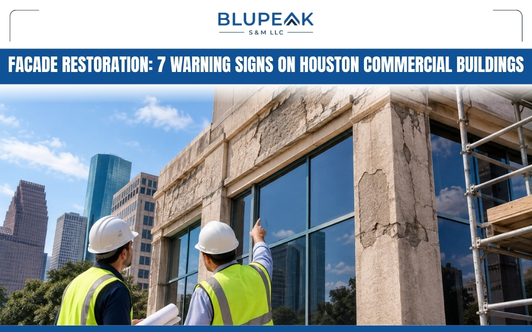
Facade restoration can help Houston commercial property owners address exterior damage before it becomes a leak, tenant complaint, safety concern, or disruptive emergency repair. Cracks, failed joints, stains, loose cladding, and recurring interior damage are not always cosmetic problems.
For facade restoration, this condition should be documented before repair work is scoped.
The right response depends on the condition, the building assembly, the source of moisture or movement, and how the property operates each day. This guide explains seven warning signs, the Houston conditions that contribute to facade deterioration, and how to plan commercial exterior work with less disruption and uncertainty.
Facade restoration is the process of investigating, repairing, protecting, and sometimes replacing parts of a commercial building exterior so the exterior can perform as intended. Depending on the property, the work may involve masonry, stucco, panels, sealants, flashing, coatings, windows, doors, transitions, or other exterior components. For properties with additional security needs, installing an Anti Climb Fence can complement facade restoration by helping restrict unauthorized access around the building perimeter.
Painting can improve appearance, but it does not automatically correct open joints, damaged substrates, failed flashing, loose panels, trapped moisture, or movement-related cracking. A durable result starts with understanding what is allowing water or air to move through the assembly and what has caused the visible deterioration.
Facade restoration planning should account for this issue before crews begin exterior work.
For example, a stained wall below a window may need more than cleaning. The source could be a failed perimeter seal, damaged sill flashing, an opening around a penetration, or water entering higher on the elevation.
Covering the stain without addressing the entry point usually creates a temporary visual improvement rather than a dependable repair.
Commercial buildings experience more than visual wear. A minor exterior opening can allow moisture into wall cavities, damage insulation, affect interior finishes, or create repeated complaints from tenants and employees. Loose material can also create a hazard in areas used by customers, pedestrians, or service personnel.
Houston conditions make early attention especially practical. High heat, humidity, intense rainfall, wind-driven storms, and repeated expansion and contraction can place stress on joints and exterior materials.
Requirements for access, protection, repairs, and approvals can also vary by property, scope, and jurisdiction, so the condition should be evaluated rather than assumed. This detail can materially affect a facade restoration scope and the repair sequence.
The following warning signs do not all indicate the same level of damage. A hairline finish crack is different from a growing crack that follows a structural or material transition. However, each sign deserves documentation and a reasonable assessment when it is recurring, expanding, widespread, or connected to moisture.
Cracks may appear in brick mortar joints, stucco, concrete, render, coatings, or panel finishes. Their pattern provides useful information. Stair-step cracking, long horizontal cracks, cracks at corners, and openings that continue to widen should not be treated as ordinary paint defects without further review.
Some cracking results from normal material movement or aging. Other cracking can be associated with settlement, thermal movement, moisture, incompatible repairs, or stress around openings. Photograph the location with a scale reference and note whether the crack is new, recurring, or visible on both the exterior and interior.
A facade restoration assessment should connect this visible condition to its underlying cause.
A remodeling contractor in Houston can then help determine whether the appropriate response is localized preparation and repair, joint treatment, sealant work, substrate replacement, or escalation to another qualified professional when the condition appears to require specialized structural or engineering evaluation.
Panels, masonry units, trim, soffits, or other cladding components that appear bowed, separated, loose, or out of alignment need prompt attention. Movement may result from fastener problems, corrosion, water damage, failed attachments, thermal stress, or deterioration behind the visible surface.
Do not rely on a visual patch if the assembly is moving. The affected area may need to be isolated, accessed safely, and examined to understand whether the issue is limited to one component or repeated across an elevation.
Areas below loose materials may also require temporary controls until the condition is evaluated. That step helps facade restoration address the problem instead of only its surface appearance.
Commercial cladding systems vary considerably. Metal panels, fiber cement, EIFS, brick veneer, stucco, and composite systems each have different joints, attachment methods, and moisture-management details. The repair approach should match the existing system rather than forcing a generic solution.
Sealants around windows, doors, expansion joints, panel seams, penetrations, and material transitions are exposed to weather and movement. Over time, they can shrink, split, pull away from one surface, harden, or lose adhesion.
This detail can materially affect a facade restoration scope and the repair sequence.
Failed sealant is one of the most commonly overlooked causes of recurring exterior leaks. Re-caulking without removing failed material, preparing the joint, checking its width and depth, and addressing adjacent damage can lead to premature failure.
The work may also require coordination around occupied spaces, storefronts, loading areas, or tenant entrances.
White deposits on masonry, dark streaks below joints, rust-colored stains, algae growth, and repeated damp areas can indicate that water is moving through or across the facade. Cleaning may improve the appearance, but the source still needs attention if the staining returns.
For facade restoration, this condition should be documented before repair work is scoped.
Look for patterns rather than isolated marks. Staining below coping, windows, roof edges, balconies, penetrations, or mechanical equipment can help identify where water is entering or being redirected. Interior evidence, such as damaged finishes on the opposite side of the wall, makes the condition more urgent to document.
Cleaning methods also matter. Aggressive pressure washing or inappropriate chemicals can damage masonry, coatings, joints, and adjacent finishes. The method should be selected for the material and the purpose of the work.
Corrosion may appear on panels, fasteners, lintels, flashing, railings, edge metal, canopies, exposed supports, or equipment-related components. Surface rust does not always mean replacement is necessary, but it should not be ignored when metal is swelling, perforated, separating, or staining adjacent materials.
Facade restoration planning should account for this issue before crews begin exterior work.
Corrosion often points to repeated moisture exposure or a detail that does not drain properly. Replacing a visible fastener while leaving water trapped behind the assembly may only delay the next failure.
The scope should identify whether the metal can be cleaned and protected, repaired, or replaced and whether nearby materials have also been affected.
Ceiling stains, peeling paint, damaged drywall, musty odors, wet insulation, bubbling finishes, and recurring leaks are important interior clues. The entry point may not be directly above the visible damage because water can travel horizontally through wall assemblies, ledges, insulation, and framing.
Record when the issue appears. A leak that occurs only during wind-driven rain may point to a different pathway than one caused by plumbing, condensation, roof drainage, or a failed window transition.
Interior repairs should generally be coordinated with exterior investigation so the same damage does not return after the finish is restored. This detail can materially affect a facade restoration scope and the repair sequence.
A building may need broader commercial building exterior renovation when the same locations require repeated patching, the finish system is failing across multiple elevations, cladding is difficult to maintain, or past modifications have created inconsistent transitions.
Owners should consider the total maintenance burden, not only the immediate repair price. A localized fix may be sensible when the surrounding system is sound. If failures are widespread, however, repeated small repairs can consume labor, disturb tenants, and leave the underlying risk unchanged.
A phased exterior improvement plan may provide better control than waiting for every problem to become urgent.
Identifying the cause helps prevent a repair from becoming a cycle of patching and recurrence. Exterior damage often comes from several factors working together, so the visible defect should be considered in relation to nearby roofs, windows, doors, drainage, penetrations, and previous repairs.
A facade restoration assessment should connect this visible condition to its underlying cause.
Houston commercial exteriors must manage heat, humidity, heavy rain, and occasional severe weather. Materials expand and contract at different rates. Sealants fatigue, coatings weather, and water can remain in poorly drained areas longer than expected.
Wind-driven rain is particularly important because it can reach joints and transitions that perform adequately during ordinary rainfall. Roof edges, parapets, window heads, panel seams, and wall penetrations deserve careful attention when leaks appear only during certain storms.
Buildings move. Masonry, metal, concrete, glass, sealants, and composite materials do not move in exactly the same way. Expansion joints and transitions must accommodate that movement while limiting water entry. That step helps facade restoration address the problem instead of only its surface appearance.
Facade restoration planning should account for this issue before crews begin exterior work.
Settlement, previous additions, incompatible materials, inadequate slope, blocked drainage paths, and poorly detailed penetrations can all contribute to deterioration. A new finish cannot correct every underlying condition, and some questions may require input from a licensed design or engineering professional depending on the observed issue and project requirements.
Deferred sealant replacement, roof drainage problems, unaddressed window leaks, tenant-installed penetrations, signage changes, equipment supports, and limited access can all affect facade performance. A property manager may also inherit incomplete records when ownership or tenancy changes.
Before work begins, gather prior repair invoices, leak reports, photographs, warranties if available, and tenant complaints. That history helps a contractor distinguish a new isolated issue from a recurring building-wide pattern and can improve the accuracy of the proposed scope.
For facade restoration, this condition should be documented before repair work is scoped.
The safest and most cost-effective response is usually organized rather than reactive. The goal is to document what is happening, protect people and property where needed, identify the likely extent, and plan work around the building’s daily use.
Take photographs from multiple distances. Record the elevation, floor, tenant area, room, date, weather conditions, and whether the issue is growing or recurring. Note any loose material, active water, odor, damaged interior finish, or blocked access.
If material appears loose or falling, keep people away from the affected area and arrange appropriate temporary protection. Do not climb, remove cladding, or perform a high-level inspection without the proper equipment and training. Safety measures, access methods, and any necessary approvals depend on the property and scope.
Facade restoration planning should account for this issue before crews begin exterior work.
A contractor should review the immediate defect and surrounding conditions. That may include adjacent joints, windows, roof edges, drainage paths, fasteners, penetrations, and areas where similar materials are used.
Localized repair may be appropriate when the defect is clearly limited and the surrounding assembly is performing. Broader commercial facade restoration may be more practical when the same failure appears across several elevations, when water damage is recurring, or when repairs have been performed repeatedly without lasting improvement.
Exterior work can affect entrances, sidewalks, parking, loading zones, deliveries, signage, customer access, and tenant schedules. Discuss access windows, noise-sensitive operations, weather exposure, debris control, temporary barriers, and communication responsibilities before mobilization. This detail can materially affect a facade restoration scope and the repair sequence.
For occupied commercial properties, phasing can be as important as the repair itself. A well-planned sequence may allow the building to remain operational while work progresses in manageable areas. The final approach depends on the building, access requirements, materials, weather, and the agreed scope.
Once the condition is documented, the next decision is whether to repair, restore, recoat, replace, or phase the work. There is no universal solution for every commercial building exterior. The right approach balances performance, appearance, access, durability, disruption, and the condition of related components.
Repair is often suitable for isolated cracks, damaged joints, limited substrate deterioration, or a small number of failed components. Restoration may involve a wider program of cleaning, joint replacement, masonry or stucco repairs, corrosion treatment, protective work, and finish renewal.
Coatings can be useful when the substrate is sound and the selected product is compatible with the existing material. They are not a substitute for repairing movement, open joints, water entry, or loose components.
Replacement may be justified when panels, trim, flashing, or other parts are extensively damaged, obsolete, or no longer practical to maintain. A facade restoration assessment should connect this visible condition to its underlying cause.
When evaluating commercial cladding systems, consider more than the sample color. Review attachment conditions, transitions, access for future maintenance, compatibility with adjacent materials, drainage, and how replacement areas will match the existing facade.
A clear scope should identify the affected elevations and locations, the observed conditions, access and protection needs, preparation requirements, repair materials, sealants or coatings, replacement components, cleanup, and any exclusions.
It should also clarify who is responsible for design decisions, testing, permits or approvals where applicable, utility coordination, tenant communication, and final selections.
Ask how concealed conditions will be handled. Exterior work can reveal damaged sheathing, wet insulation, deteriorated framing, hidden corrosion, or previous repairs that were not visible during initial review. A reasonable contingency process should explain how those discoveries will be documented and approved before additional work proceeds.
That step helps facade restoration address the problem instead of only its surface appearance.
BLUPEAK is a Houston-based general contractor providing exterior remodeling services, repairs, painting, renovations, and broader property improvement support for commercial and residential customers.
For a commercial building exterior renovation, our role may include helping define the work, coordinate trades, organize access, manage exterior repairs or improvements within the agreed scope, and keep property stakeholders informed.
A property owner or manager may contact BLUPEAK after noticing failed exterior finishes, storm-related damage, recurring leaks, deteriorated siding or cladding-related components, or a need to improve the building’s appearance and durability.
The practical next step is to share the building history, affected areas, photographs, access constraints, and operational concerns so the project can be evaluated on its actual conditions rather than on a generic repair assumption.
The seven warning signs of needed facade restoration include cracking, displaced cladding, failed sealants, recurring staining, corrosion, interior water evidence, and repeated repairs or widespread exterior aging. None should be judged by appearance alone. The pattern, location, building assembly, moisture history, and effect on occupants all matter.
For facade restoration, this condition should be documented before repair work is scoped.
Early documentation gives commercial property owners more choices. It can make it easier to compare localized repairs with a broader restoration plan, coordinate work around tenants, address related exterior conditions, and avoid treating interior damage without correcting the source.
Houston commercial buildings face demanding weather and operating conditions, so exterior decisions should be based on the actual property and verified project requirements. BLUPEAK S&M LLC can help property owners and managers plan exterior remodeling services, commercial repairs, painting, renovations, and related improvements with practical coordination and a clear scope.
If you are seeing one or more of these warning signs, schedule an assessment before the condition becomes a larger operational problem.

See why homeowners and businesses across Houston trust us for quality workmanship and reliable service. Read real reviews from clients who have experienced our commitment to excellence firsthand.