
How to Budget for a Home Renovation in Houston: Key Costs to Consider
Learning how to budget for a home renovation starts with more than picking a number and browsing finishes; it requires...
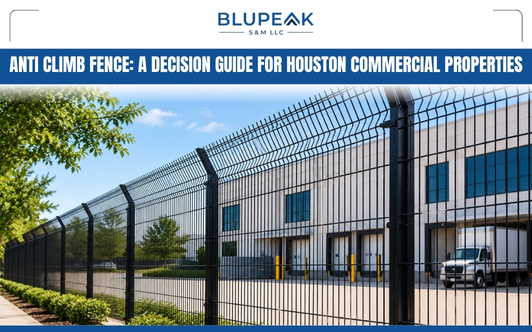
Anti climb fence planning starts with a practical question: will the proposed perimeter actually discourage unauthorized access without creating daily problems for employees, tenants, deliveries, and maintenance crews? For Houston commercial properties, the answer depends on more than fence height.
Mesh design, gates, site conditions, lighting, cameras, drainage, and installation quality all affect how well the perimeter performs. For an anti climb fence, this detail should be resolved before final layout and installation.
A commercial fence should support the way a property operates, not simply surround it. This guide explains when anti climb fencing is appropriate, how to compare types of commercial fencing, what Houston property owners should review before installation, and how to plan commercial fence installation with fewer surprises.
An anti climb fence is a perimeter fence designed to make climbing difficult by reducing footholds, handholds, and opportunities to bend or break the barrier. Common designs use rigid welded mesh, narrow openings, reinforced framework, and carefully planned gates.
The objective is to delay and discourage unauthorized entry, not to claim that any fence is impossible to defeat. An anti climb fence plan should account for this condition along the full perimeter.
That distinction matters. A security fence is only one layer of a property’s protection. A well-designed perimeter can make casual entry more difficult, improve visibility for cameras and patrols, and create a clear boundary. It cannot replace access control, lighting, operating procedures, or a site-specific security assessment.
Traditional chain-link fencing may be suitable for many commercial applications, but its larger openings and familiar framework can provide more opportunities for climbing. Anti climb products typically use smaller openings and a rigid surface that offers fewer usable points for hands and feet.
Some systems also incorporate specialized top treatments or angled elements, subject to property requirements and applicable rules.
The complete assembly matters. A strong panel attached to weak posts, loose hardware, or an easily bypassed gate will not provide the result the owner expects. During planning, review the panel or mesh, posts, rails, connections, corners, termination points, and the transition between fence sections and buildings.
This consideration can affect how an anti climb fence performs at the property.
Anti climb fencing is often considered for warehouses, distribution facilities, remodeling contractor in Houston, equipment storage areas, multifamily properties, commercial campuses, and construction sites. It can be especially useful where stored materials, vehicles, mechanical equipment, copper, tools, or restricted areas are exposed to after-hours access.
It may also help separate employees, tenants, and visitors from service yards or equipment zones. For a property manager, the right design can reduce informal shortcuts through a site and make access responsibilities easier to define. That check helps an anti climb fence support security without creating avoidable operational issues.
However, higher security is not automatically the best answer for every boundary. A highly restrictive fence may complicate deliveries, emergency access, visibility, landscaping, or future expansion. The design should match the actual risk and the way people use the property.
A commercial security fence works best when it is coordinated with the rest of the site. Before choosing a product, identify where lighting is poor, where cameras lose visibility, where gates are routinely propped open, and where vehicles or dumpsters create an easy route over or around the boundary.
An anti climb fence specification should document this point before materials are ordered.
Consider these connected elements:
At BLUPEAK, we approach commercial fencing as part of a broader property improvement project when the scope calls for coordination with concrete, access areas, repairs, painting, or other site work. That broader view helps prevent a new perimeter from creating a separate operational problem.
There is no single best commercial security fence for every property. The practical choice depends on the risk being managed, the level of visibility required, the appearance expected by tenants or customers, the available budget, and the amount of maintenance the property team can realistically perform.
For an anti climb fence, this detail should be resolved before final layout and installation.
The most useful comparison is not simply “metal versus chain link.” Review the complete system and how it will function on a typical weekday, during deliveries, after hours, and during maintenance access.
That check helps an anti climb fence support security without creating avoidable operational issues.
Mesh opening is one of the first design considerations. Smaller openings generally provide fewer footholds, while rigid panels are less forgiving when someone pushes, bends, or pulls on the fence. Posts and connections should be appropriate for the selected system and the site conditions. For Best Fence Installation, choosing suitable mesh sizes, durable materials, and properly secured posts helps improve perimeter security and long-term fence performance.
Corners, slopes, end posts, and gate openings typically require particular attention because they carry different loads and often receive more use.
Height should be selected based on the property’s risk, surroundings, visibility needs, and applicable requirements. A taller fence can increase deterrence, but it may also affect sightlines, wind exposure, installation access, and the appearance of a commercial frontage.
Adding height without improving gates, lighting, or vulnerable transitions may produce less benefit than expected. An anti climb fence plan should account for this condition along the full perimeter.
Coatings and material choices also matter in Houston’s humid environment. Ask how the proposed finish is intended to handle weather exposure, scratches, standing moisture, and routine cleaning. The correct selection can vary based on whether the fence borders pavement, landscaped soil, a drainage area, or an industrial service yard.
Gates are where many perimeter plans become difficult. A vehicle gate must accommodate delivery trucks, service vehicles, employee traffic, and emergency planning without leaving the property open for convenience. A pedestrian gate may need controlled access, visibility, and a reliable closing arrangement.
This consideration can affect how an anti climb fence performs at the property.
Review swing direction, slide clearance, slope, pavement condition, latch height, lock compatibility, and space for vehicles to queue. A gate that opens into an active drive aisle can create a daily hazard.
A gate that is too narrow may be bypassed or left open because it frustrates the people expected to use it.
Ask who will control access and who will maintain the hardware. If a property uses electronic access control, the fence contractor and access-control provider may need to coordinate dimensions, power pathways, mounting points, and commissioning responsibilities. Requirements vary by system and property, so those details should be defined before installation.
That check helps an anti climb fence support security without creating avoidable operational issues.
Open anti climb mesh can preserve visibility for cameras, security personnel, and passing staff. It may also make a property feel less enclosed and allow neighbors or patrols to observe activity. Privacy-oriented materials can conceal equipment and operations, but they may reduce natural surveillance and increase wind loading.
For a customer-facing commercial property, appearance can be just as important as resistance to climbing. A clean, consistent fence line often looks more intentional than a patchwork of repairs and mismatched gates.
For an industrial yard, function may take priority, but the fence still needs to support vehicle movement and routine inspections. An anti climb fence specification should document this point before materials are ordered.
The best design balances security, visibility, privacy, maintenance, and the property’s public image. A commercial fence installation contractor should be able to explain those trade-offs rather than recommend a product without reviewing the site.
Houston properties face a combination of heat, humidity, intense rain, storm exposure, drainage challenges, and varied soil and pavement conditions. These factors do not automatically determine a fence design, but they deserve attention before materials are ordered or posts are installed.
A site walk should evaluate the existing property rather than assume the boundary is a simple straight line. Small details often affect cost, constructability, and long-term performance more than the fence product itself. For an anti climb fence, this detail should be resolved before final layout and installation.
Confirm the intended fence line against available property information and existing improvements. Review curbs, sidewalks, parking areas, retaining features, drainage paths, utility locations, fire access areas, neighboring improvements, and easements where applicable.
The property owner or manager may need to provide records, coordinate utility information, or obtain approvals from a landlord, association, or development authority.
Existing concrete can also change the installation approach. Posts may be installed in soil, attached to a suitable slab or curb, or require localized demolition and repair. A fence line crossing uneven pavement or a sloped service yard may need stepped or adjusted sections.
Those decisions should be documented in the scope so the proposal is not based on an unrealistic straight-line assumption. An anti climb fence plan should account for this condition along the full perimeter.
Do not overlook areas where the fence meets a building, wall, dumpster enclosure, loading dock, or neighboring boundary. These transitions can create gaps or easy bypass routes if they are treated as an afterthought.
This consideration can affect how an anti climb fence performs at the property.
Houston’s weather makes maintenance planning important. Inspect for loose connections, damaged coatings, leaning posts, gate sag, corrosion, vegetation growth, and soil erosion after severe weather or heavy rain. Water that collects at the base of a fence can accelerate deterioration, particularly where drainage is poor or landscaping is overwatered.
This consideration can affect how an anti climb fence performs at the property.
A maintenance plan should identify who will inspect gates, clear vegetation, lubricate or adjust hardware where appropriate, repair impact damage, and document recurring problems. For property managers, these records can help distinguish isolated damage from a broader drainage, traffic, or access issue.
Storm resilience also involves the surroundings. A fence may be intact while nearby tree limbs, unsecured materials, or damaged gates create a security weakness. The most useful review considers the perimeter as an operating asset that needs periodic attention.
That check helps an anti climb fence support security without creating avoidable operational issues.
Fence requirements can vary by municipality, zoning situation, property type, location, height, setback, easement, and relationship to streets or neighboring parcels. Commercial properties may also have landlord standards, site-development conditions, access requirements, or design guidelines. Confirm applicable requirements with the responsible local authority and property stakeholders before work begins.
The contractor can help identify scope questions and coordinate construction activities, but official approvals and decisions remain with the applicable authority or property owner. The customer may also be responsible for providing access, confirming the fence line, approving materials, coordinating with tenants, and responding to requests for documentation.
When BLUPEAK supports a Houston-area commercial property improvement project, our role is to help organize the construction scope, identify coordination needs, and complete the agreed work without presenting permitting, inspection, or third-party approval as guaranteed. An anti climb fence specification should document this point before materials are ordered.
Commercial fence installation is easier to manage when the property team defines the operational constraints before the first post is set. A warehouse may need uninterrupted truck access. A multifamily property may need resident communication and temporary pedestrian routes.
A construction site may need the perimeter installed in phases as work areas change.
The planning process should connect the security objective with the property’s daily schedule, not treat installation as an isolated exterior project.
Begin by documenting what the fence must accomplish. Identify vulnerable areas, desired access points, restricted zones, existing fence to remain, sections requiring removal, and locations where the boundary must connect to another structure.
Note whether the priority is climb resistance, asset protection, visibility, privacy, traffic control, appearance, or a combination of these goals. For an anti climb fence, this detail should be resolved before final layout and installation.
A useful scope should address panel or mesh type, approximate height, posts, gates, hardware, finishes, foundations or attachments, tie-ins, demolition, concrete or pavement repairs, cleanup, and exclusions. It should also identify assumptions about access, staging, utility information, and working hours.
If future expansion is likely, discuss it early. A fence that is inexpensive today may be difficult to extend if gate locations, corner posts, or property circulation are not planned with growth in mind. An anti climb fence plan should account for this condition along the full perimeter.
For an active commercial property, phasing can be more important than speed. Establish where employees, tenants, customers, delivery vehicles, and emergency responders will move during each phase. Temporary barriers or alternate routes may be needed, but their use should be defined and communicated rather than improvised each morning.
Coordinate noisy or disruptive work with tenant schedules, loading periods, business hours, and other contractors. Protect parked vehicles, stored materials, landscaping, pavement, and building finishes. If gates must be removed temporarily, decide how access will be controlled during that period and who will communicate changes to occupants.
This consideration can affect how an anti climb fence performs at the property.
A phased plan is particularly valuable when the property has multiple buildings or when the fence forms part of a construction-site security perimeter. It allows the owner to maintain a controlled boundary while work progresses.
When reviewing a commercial fencing proposal, look beyond the total price.
Confirm that the documents describe the actual fence system and not just a general phrase such as “security fencing.” Ask how the proposal addresses site preparation, posts, gate hardware, difficult transitions, existing concrete, removal, cleanup, and repairs to adjacent surfaces.
Also clarify:
A clear proposal makes it easier to compare types of commercial fencing fairly. It also reduces the chance that the property team discovers after work begins that a critical gate, tie-in, or access condition was never included.
That check helps an anti climb fence support security without creating avoidable operational issues.
BLUPEAK can support commercial property owners and managers with fencing-related construction coordination and related property improvement needs where appropriate. Depending on the site, that may include coordinating repairs, concrete work, painting, access areas, or other commercial improvements around the perimeter.
The right scope is determined by the property, the intended use, and the work that can be responsibly defined before construction.
The right anti climb fence is not selected by height or appearance alone. Start by defining the actual security concern, then evaluate mesh or panel design, posts, gates, visibility, lighting, access control, drainage, weather exposure, and the surrounding property as one system.
For Houston commercial properties, careful review of moisture, storms, pavement, traffic flow, and approval requirements can reduce avoidable problems later. An anti climb fence specification should document this point before materials are ordered.
A successful commercial fence installation should protect the perimeter while still allowing the business, tenants, deliveries, and maintenance teams to function. A clear scope, realistic phasing plan, and experienced contractor coordination are often more valuable than choosing a product from a catalog without reviewing the site.
BLUPEAK S&M LLC helps Houston-area property owners and managers plan and coordinate commercial construction, repairs, renovations, and property improvements. If your property needs a commercial security fence, begin with a site review and a written scope that identifies the security objective, access requirements, existing conditions, and responsibilities for approvals and coordination.
For an anti climb fence, this detail should be resolved before final layout and installation.

See why homeowners and businesses across Houston trust us for quality workmanship and reliable service. Read real reviews from clients who have experienced our commitment to excellence firsthand.