
How to Budget for a Home Renovation in Houston: Key Costs to Consider
Learning how to budget for a home renovation starts with more than picking a number and browsing finishes; it requires...
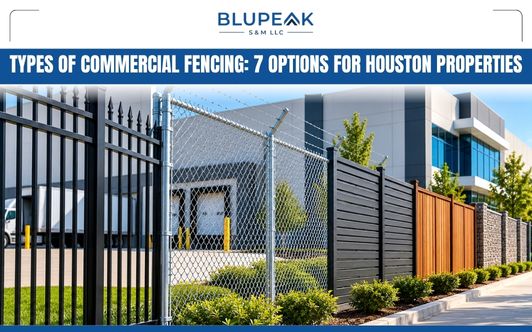
Types of commercial fencing matter when your Houston business needs more than a boundary lineâyou need controlled access, dependable security, appropriate visibility, and a system that can withstand demanding property conditions. Choosing the wrong fence can create problems with delivery traffic, tenant access, maintenance, privacy, or future expansion.
The right commercial fence installation starts with how the property operates. This guide explains common commercial fence types, where each works best, how to compare security and maintenance needs, and what to review with commercial fencing contractors before work begins.
Commercial properties rarely have a single fencing requirement. A warehouse may need a durable perimeter around vehicles and equipment, while an office or retail property may need controlled access without creating a severe visual barrier.
A property manager may also need separate solutions for dumpsters, mechanical equipment, loading areas, and pedestrian entrances.
The most useful way to compare commercial fencing is to consider the job the fence must perform.
Is it mainly defining the property, slowing unauthorized access, screening an area, protecting valuable assets, guiding vehicles, or supporting a broader security plan? The answer affects the fence material, height, gate design, hardware, and installation method.
Among the types of commercial fencing, chain link remains one of the most adaptable choices for commercial properties. It is commonly used around warehouses, construction areas, storage yards, utility spaces, service compounds, and equipment areas because it provides a clear boundary while preserving visibility. For properties that require added security, an anti-climb fence can offer an extra layer of protection by making unauthorized access more difficult.
Galvanized chain link is a practical option where durability and straightforward maintenance are priorities. Vinyl-coated chain link can provide a different appearance and an additional protective finish.
Privacy slats may be considered when a site needs to reduce visibility without switching to a solid fence, although slats can affect wind exposure and maintenance requirements.
Among the types of commercial fencing, standard chain link is not automatically a high-security fence. Its performance depends on height, mesh size, post spacing, top and bottom details, gate hardware, and how the entire site is managed.
A basic perimeter may be appropriate for controlling access to a service yard, while a property storing valuable equipment may require a more robust system and additional security measures.
Among the types of commercial fencing, ornamental steel or aluminum is often selected for office properties, retail centers, multifamily communities, schools, medical facilities, and customer-facing entrances. It can define boundaries and guide people without making the property look like an industrial compound.
This type of fencing is especially useful where visibility matters. Staff can maintain sightlines toward entrances, walkways, and parking areas, while the fence still discourages casual entry. Steel typically provides a heavier, more impact-resistant appearance, while aluminum may be considered where lower weight or corrosion concerns influence the selection.
Across types of commercial fencing, panels are only one part of the system. Posts, rails, hinges, latches, vehicle gates, pedestrian gates, and surface protection need to work together. A decorative fence with an undersized gate or weak hardware may not perform well under daily commercial use.
Welded-wire and steel-mesh systems use rigid panels rather than flexible woven fabric. They can provide a cleaner appearance and a more difficult-to-cut or climb barrier for certain commercial and industrial applications.
These systems may fit equipment yards, service compounds, mechanical areas, and properties that need a firm perimeter with consistent panel spacing.
Their rigidity can also make them easier to align visually along a straight run. However, the panel design, opening size, post connection, coating, and gate assembly all influence actual performance.
Among the types of commercial fencing, a rigid mesh fence is not a universal substitute for a high-security fence. The appropriate configuration depends on the property’s exposure, the value of the assets inside, the expected threats, and the way employees, vendors, and emergency personnel need to enter the site.
Solid fencing is useful when the goal is to screen an area rather than maintain complete visibility. Common applications include dumpster enclosures, outdoor storage, mechanical equipment, loading areas, and service zones visible from neighboring properties or public streets.
When comparing types of commercial fencing, wood, vinyl, composite, and other solid-panel materials each have different maintenance and durability considerations. Wood may require more ongoing attention to finish and moisture exposure.
Vinyl can offer a consistent appearance but still requires proper support and cleaning. Composite products may provide a different balance of appearance and maintenance, depending on the selected system.
Privacy can also create trade-offs between types of commercial fencing. A solid fence catches more wind than an open fence, may conceal activity that staff need to observe, and can complicate access for repairs.
In Houston’s heat, humidity, heavy rainfall, and occasional severe storms, the supporting posts, drainage conditions, and connection details deserve as much attention as the panels.
High-security fencing is designed for properties with elevated concerns about unauthorized entry, theft, vandalism, or access to valuable assets. Depending on the project, the system may include taller barriers, smaller openings, stronger posts, anti-climb features, controlled gates, and hardware selected for frequent or restricted use. A reliable remodeling contractor in Houston can also help coordinate property improvement projects that support overall site security and functionality.
Security-focused types of commercial fencing should be treated as one layer of a broader property strategy. Lighting, cameras, access control, employee procedures, gates, and visibility may all affect the result.
A fence contractor can install a physical barrier, but the property owner or manager must determine how the site will be monitored and operated.
Not every business needs the highest-security types of commercial fencing. Installing a heavier system than the property requires can increase cost, restrict visibility, and make routine access more difficult.
The better approach is to match the fence to documented risk and daily operations rather than choosing the most substantial-looking option by default.
The best commercial fence type is the one that supports the property’s actual use without creating unnecessary maintenance or access problems. Before comparing bids, define what the fence must protect, who needs access, how vehicles move, and how the fence will be maintained after installation.
Before comparing types of commercial fencing, begin with the assets and activities behind the fence. A small enclosure for air-conditioning equipment has a different purpose from a perimeter around fleet vehicles, construction materials, or high-value inventory.
Consider after-hours activity, public access, previous vandalism or trespassing concerns, employee circulation, and the visibility needed for staff or cameras. A commercial security fence may be appropriate in one section of a property while a more open ornamental fence is better near the front entrance.
Any of the types of commercial fencing can be strong yet poorly planned if gates interfere with business operations.
Review the size and frequency of delivery vehicles, service trucks, trailers, forklifts, employee vehicles, and pedestrian traffic. Gate swing, sliding clearance, turning space, latch position, and access-control equipment should be considered before posts are set.
Across types of commercial fencing, an occupied property’s installation plan also matters. A retail center, medical office, apartment community, or industrial facility may need work phased around customers, tenants, deliveries, or restricted areas.
The exact sequence depends on the site, but access planning should be part of the scope rather than an afterthought.
| Fence Type | Common Strength | Main Trade-Off | Typical Commercial Use |
|---|---|---|---|
| Chain link | Practical visibility and adaptable layouts | Provides less privacy and may need upgrades for higher security | Warehouses, storage yards, service areas |
| Ornamental metal | Appearance, visibility, and controlled boundaries | Usually requires more deliberate design and hardware selection | Offices, retail, multifamily, public-facing entrances |
| Welded wire or steel mesh | Rigid panels and consistent appearance | Panel and coating choices affect cost and repairability | Equipment yards, industrial compounds, service areas |
| Solid privacy fencing | Screening and visual separation | Reduced visibility and greater wind exposure | Dumpsters, mechanical equipment, storage areas |
| High-security fencing | Stronger access deterrence when properly specified | May increase cost, restrict access, and require coordinated security planning | Higher-risk facilities and valuable asset areas |
Houston’s heat, humidity, rainfall, storms, and variable drainage conditions can influence how different types of commercial fencing perform. Standing water around posts, poor soil conditions, vegetation growth, corrosion, and repeated gate movement can shorten the useful life of an otherwise suitable system.
During planning, ask how posts will be installed, whether the site drains properly, what coating or corrosion protection is appropriate, and how damaged sections can be repaired. Gates deserve regular attention because hinges, rollers, latches, and alignment components often experience more wear than the fence line itself.
At BLUPEAK S&M LLC, we compare types of commercial fencing as part of the property’s broader improvement needs. If a fence project overlaps with concrete repairs, parking areas, exterior work, access improvements, or recurring property maintenance, coordinating the scope can help reduce conflicts between separate work activities.
Installing any of the types of commercial fencing involves more than ordering panels and setting posts. The contractor needs to understand the property, confirm the scope, coordinate access, and identify conditions that could affect layout or performance.
Requirements for permits, easements, property lines, utilities, landlord approvals, accessibility, fire lanes, or other site conditions can vary, so they should be verified for the specific project.
The process normally begins with a review of the proposed fence line, existing surfaces, slopes, drainage, gates, utilities, adjacent properties, and any fence that will be removed or repaired.
Commercial sites often contain pavement, underground services, retaining features, landscaping, or shared access routes that are not obvious from a simple measurement.
For different types of commercial fencing, the scope should identify the fence type, approximate height, finish or coating, posts, gates, hardware, removal requirements, cleanup, and any areas that require special treatment.
If the property line is uncertain, the owner or manager may need to obtain appropriate documentation or professional confirmation before construction proceeds.
A fence system should be reviewed as a complete assembly. The fabric or panels, posts, rails, brackets, hinges, rollers, latches, locks, and access-control interfaces need to suit the fence’s intended use.
A vehicle gate that is too narrow or poorly located can create daily delays even when the fence itself is well built.
When comparing types of commercial fencing, properties with card readers, keypads, intercoms, automatic operators, or cameras may require coordination with other contractors or technology providers.
The fence installer can support physical installation and coordination within the agreed scope, but the owner should confirm who is responsible for programming, testing, electrical work, and ongoing system management.
Installing different types of commercial fencing must account for people and vehicles using the property. Before installation begins, discuss temporary access, delivery routes, restricted areas, tenant notifications, staging, material storage, and the sequence for removing an existing barrier.
Some projects can be completed in sections; others may require a temporary protection plan while a perimeter is open.
The best schedule is not simply the fastest sequence. It is the sequence that protects people, limits disruption, and keeps critical operations moving where practical. Actual timing depends on site conditions, material availability, approvals, weather, and the final scope, so a contractor should avoid presenting an unverified schedule as guaranteed.
Before the project is considered complete, review fence alignment, post stability, panel or fabric attachment, gate operation, latch engagement, hardware, coatings, cleanup, and areas where drainage could affect the installation. Documenting the completed work can help property managers handle future repairs or additions.
Maintenance for all types of commercial fencing should include periodic checks of gates, hinges, rollers, latches, fasteners, coatings, vegetation, and impact damage. A commercial property maintenance plan can identify small failures before a leaning gate or damaged section creates an access or security problem.
Many fence problems begin before installation. They usually result from selecting a product without defining the site’s use, overlooking gates and access, or treating the fence as an isolated improvement. A careful scope review can prevent avoidable change orders and operational disruptions.
A property owner may choose chain link because it is familiar, then discover that the business needed privacy, stronger access deterrence, or a more professional appearance. The opposite problem also occurs: a heavy security system is installed where an open, visible barrier would have supported operations better.
Start with the purpose of each fence section when comparing types of commercial fencing. A single property may legitimately use multiple commercial fence types, such as ornamental metal at the entrance, chain link around a service yard, and solid panels around a dumpster enclosure.
Gate problems are among the most disruptive issues on commercial properties. A gate that does not accommodate delivery vehicles, opens into a traffic path, or lacks durable hardware can affect employees and vendors every day.
Review vehicle dimensions, turning movements, pedestrian routes, emergency access considerations, security procedures, and future service needs. Do not assume that a gate arrangement is acceptable simply because it fits on a drawing. It must work in the field and should be reviewed against applicable property and authority requirements.
For any of the types of commercial fencing, a fence installed across a wet or poorly draining area may experience premature movement, corrosion, or difficult maintenance. Houston’s weather makes it important to consider runoff, standing water, intense sun, vegetation, and storm exposure during planning.
The correct response varies by site. It may involve adjusting the layout, improving drainage, selecting different protection, reinforcing a section, or creating an easier maintenance route. These decisions should be based on observed conditions rather than assumptions.
Most types of commercial fencing affect tenant communication, inspections, repairs, landscaping, parking, deliveries, and future construction. Property managers should retain the fence scope, product information, gate details, and any maintenance recommendations so future service providers can work from accurate information.
BLUPEAK S&M LLC can help commercial property owners and managers evaluate fencing alongside related repairs, exterior improvements, concrete work, striping, painting, and ongoing property services when those needs are part of the same improvement plan.
The goal is not to add unnecessary work; it is to coordinate related work when doing so makes the project easier to manage.
The right types of commercial fencing depend on more than material or appearance. Security risk, visibility, privacy, vehicle movement, gate use, weather exposure, drainage, maintenance, and future property changes all influence the best solution.
Chain link may be the practical choice for one area, while ornamental metal, welded mesh, privacy panels, or high-security fencing may be more appropriate elsewhere.
Before choosing among the types of commercial fencing, define what each section must accomplish and how the property will operate during and after the work. Confirm the fence line, access requirements, gate dimensions, maintenance expectations, and any approvals or site-specific requirements that may apply.
For Houston-area businesses and property managers, BLUPEAK S&M LLC can support commercial fencing and related property improvement needs through project planning, coordination, installation, repairs, and maintenance-oriented services where appropriate.
A site review and clearly defined scope are the practical next steps toward a fence that supports the property instead of creating new operational problems.

See why homeowners and businesses across Houston trust us for quality workmanship and reliable service. Read real reviews from clients who have experienced our commitment to excellence firsthand.