
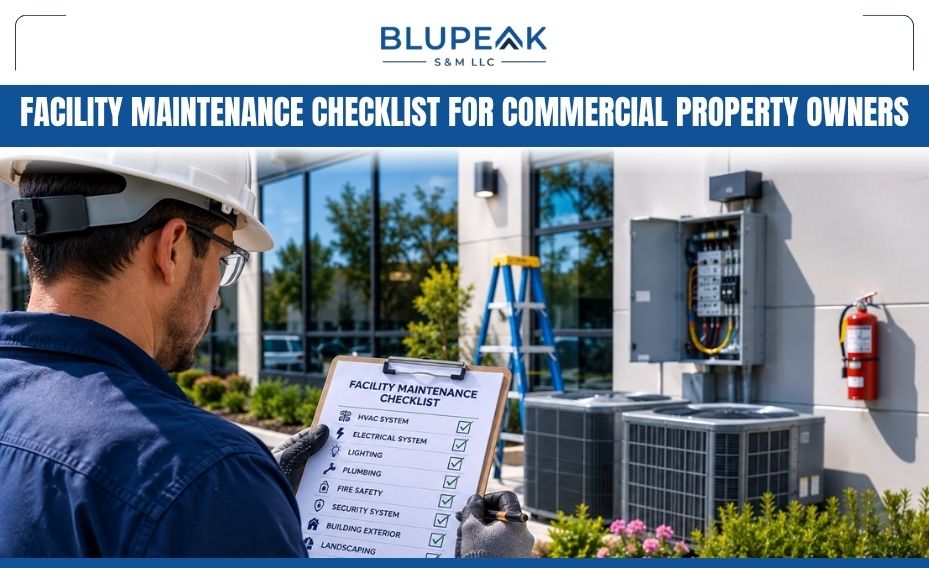
Facility Maintenance Checklist for Commercial Property Owners
Facility maintenance is one of the most important responsibilities for any commercial property owner because it directly affects safety, tenant satisfaction, operating costs, and the long-term condition of the building. Whether you manage an office building, retail center, warehouse, medical facility, or multi-tenant commercial property, staying ahead of routine maintenance helps prevent small issues from turning into expensive disruptions.
Unlike emergency repairs that happen after something fails, a structured maintenance plan focuses on preventing problems before they impact daily operations. From inspecting roofs and HVAC equipment to maintaining parking lots, lighting, plumbing, and common areas, every part of the property requires regular attention. A practical checklist makes it easier to prioritize inspections, schedule repairs, and document completed work throughout the year.
For commercial property owners in Houston, maintenance planning is even more important because buildings are exposed to intense heat, humidity, heavy rainfall, and seasonal storms. These conditions can accelerate wear on exterior materials, mechanical systems, and paved surfaces if they are not monitored consistently.
In this guide, we'll walk through a complete facility maintenance checklist for commercial properties, explain what should be inspected, and show how proactive maintenance can help protect your investment while supporting tenants, employees, and visitors.
Why Facility Maintenance Matters for Commercial Properties
Commercial buildings are significant investments that require continuous care to remain safe, functional, and attractive. Facility maintenance is much more than fixing broken equipment—it is an ongoing process of inspecting, servicing, repairing, and improving every part of a property before problems become larger and more expensive.
A consistent maintenance strategy helps owners extend the lifespan of building components while reducing unexpected interruptions that can affect business operations.
How Facility Maintenance Protects Daily Operations
Every commercial property depends on multiple systems working together. If one critical component fails, it often affects many others.
HVAC Systems
Heating, ventilation, and air conditioning equipment regulate indoor comfort for employees, customers, and tenants. Routine inspections, filter replacements, and preventive servicing help reduce unnecessary strain on equipment while maintaining reliable performance.
Plumbing Systems
Minor plumbing issues can quickly develop into water damage, mold growth, or operational disruptions. Regular inspections help identify leaks, worn fixtures, drainage problems, and other concerns before they escalate.
Electrical Components
Lighting, electrical panels, outlets, switches, and emergency power systems all require periodic inspections. Maintaining these systems helps reduce downtime while supporting safer working environments.
Roofing and Building Envelope
Roofs, gutters, exterior walls, windows, and doors protect the building from weather exposure. Regular inspections allow property owners to detect damaged materials, clogged drainage systems, or water intrusion before they affect interior spaces.
Reducing Reactive Repairs Through Preventive Planning
Many expensive commercial repairs begin as relatively small maintenance issues. A loose roof flashing, a minor plumbing leak, or cracked pavement may seem insignificant today but can become costly if left unattended.
Facility maintenance shifts the focus from reacting to emergencies toward identifying problems early. Scheduled inspections allow maintenance teams to repair worn materials before failures interrupt tenants or daily business activities.
Preventive maintenance also makes budgeting easier because repairs can often be planned instead of being handled as unexpected emergency expenses.
Improving Tenant and Customer Experience
People notice when a commercial property is clean, well-maintained, and operates efficiently. Comfortable indoor temperatures, working lighting, clean restrooms, attractive landscaping, and properly maintained parking areas all contribute to a positive experience.
Commercial facility maintenance also demonstrates that property owners are actively caring for their investment. This can improve tenant satisfaction, encourage lease renewals, and create a more welcoming environment for visitors and customers.
What Should Be Included in a Commercial Facility Maintenance Checklist?
An effective maintenance checklist covers every major area of the property instead of focusing only on obvious repairs. Commercial buildings contain dozens of interconnected systems, and overlooking one area can eventually affect others.
Commercial facility maintenance becomes much easier when inspections follow a consistent schedule and every completed task is properly documented.
Building Exterior and Site Conditions
The exterior is constantly exposed to weather, sunlight, moisture, and heavy daily use. Regular inspections help identify deterioration before it spreads.
Roofing and Drainage
Roof inspections should include checking for damaged roofing materials, clogged gutters, standing water, deteriorated flashing, and blocked roof drains. Early detection helps reduce the risk of leaks and interior water damage.
Exterior Walls and Finishes
Walls, siding, paint, brick, and exterior finishes should be inspected for cracks, moisture intrusion, loose materials, or signs of aging that could affect structural protection or appearance.
Doors and Windows
Exterior doors and windows should open and close properly while maintaining weather protection. Damaged seals, broken hardware, or worn weatherstripping can increase energy loss and allow moisture inside.
Parking Areas and Walkways
Parking lots, sidewalks, curbs, and pedestrian pathways experience constant traffic. Cracks, uneven concrete, faded markings, and drainage issues should be addressed before they become safety concerns.
Interior Repairs and Common Areas
Interior spaces create daily impressions for tenants, employees, and visitors. Keeping these areas in good condition supports both safety and professionalism.
Walls and Ceilings
Inspect drywall, ceiling tiles, painted surfaces, and trim for stains, cracks, moisture damage, or physical wear that may indicate larger building issues.
Flooring
Carpet, tile, vinyl, concrete, and other flooring materials should be checked for loose sections, trip hazards, excessive wear, or moisture damage.
Doors, Hardware, and Shared Spaces
Interior doors, locks, hinges, handrails, cabinets, and common areas should remain fully functional while presenting a clean and organized appearance.
HVAC, Plumbing, and Electrical Systems
Mechanical systems require regular attention because they support nearly every aspect of building operations.
HVAC Equipment
Routine inspections should include filters, belts, thermostats, airflow, refrigerant performance, and overall equipment condition to support efficient operation.
Plumbing Components
Water heaters, pipes, fixtures, drains, valves, and restrooms should be inspected regularly for leaks, corrosion, slow drainage, or water pressure concerns.
Electrical Systems
Panels, breakers, lighting fixtures, emergency lighting, outlets, and wiring should be evaluated for wear, damage, or operational issues that require repair.
Parking Lots, Striping, and Exterior Safety Markings
Parking areas influence both safety and first impressions.
Pavement Condition
Inspect asphalt and concrete for cracks, potholes, uneven surfaces, and drainage problems that may create hazards for vehicles or pedestrians.
Parking Lot Striping
Clearly visible parking lines improve traffic flow while helping maximize available parking spaces.
Fire Lane Striping
Fire lane markings should remain highly visible so emergency access routes stay clearly identified throughout the property.
Pedestrian Safety
Crosswalk markings, directional signs, wheel stops, and accessibility routes should be inspected regularly to improve site safety.
Cleaning, Waste, and Facility Cleaning and Maintenance
Routine cleanliness is an essential part of facility maintenance because appearance and sanitation directly affect occupant experience.
Common Area Cleaning
Lobbies, hallways, break rooms, elevators, and restrooms should be cleaned consistently to maintain a professional environment.
Waste Management
Trash collection areas should remain organized and free from overflowing containers that may attract pests or create unpleasant odors.
Exterior Cleaning
Pressure washing, debris removal, and cleaning entrances help preserve curb appeal while reducing slip hazards caused by dirt, algae, or accumulated debris.
Long-Term Facility Cleaning and Maintenance
Facility cleaning and maintenance should follow a regular schedule that coordinates janitorial work with inspections, repairs, and seasonal upkeep. Combining these activities helps commercial properties remain attractive while reducing unnecessary deterioration over time.
Daily, Weekly, Monthly, and Seasonal Facility Maintenance Tasks
Creating a maintenance schedule is just as important as creating a checklist. Dividing inspections into daily, weekly, monthly, and seasonal responsibilities helps ensure that no area of the property is overlooked while making workloads easier to manage.
Commercial facility maintenance works best when inspections become routine rather than waiting for equipment failures or tenant complaints.
Daily Walkthrough Items
Daily walkthroughs help identify visible problems before they affect building operations.
Building Entrances
Inspect entrances for damaged doors, loose hardware, debris, water accumulation, and accessibility concerns.
Common Areas
Walk through lobbies, hallways, elevators, stairwells, and shared spaces to identify cleanliness issues, lighting problems, or damaged finishes.
Restrooms
Check plumbing fixtures, supplies, lighting, ventilation, and cleanliness throughout all restroom facilities.
Safety Concerns
Look for trip hazards, spills, damaged flooring, exposed wiring, blocked exits, or any condition requiring immediate attention.
Weekly Inspection Items
Weekly inspections provide a more detailed review of major building systems.
Exterior Lighting
Inspect parking lot lighting, building-mounted fixtures, security lighting, and entrance illumination.
HVAC Performance
Check filters, airflow, unusual noises, thermostat operation, and visible equipment condition.
Plumbing Fixtures
Inspect sinks, toilets, faucets, drains, and visible piping for leaks or operational issues.
Facility Cleaning and Maintenance Reviews
Review completed cleaning activities to verify that high-traffic areas continue meeting property standards while identifying locations that may require additional attention.
Monthly Preventive Maintenance Items
Monthly inspections focus on identifying gradual wear that may not be obvious during daily walkthroughs.
Roofing and Drainage
Inspect roof surfaces, flashing, gutters, and drainage systems for signs of deterioration.
Interior Finishes
Review paint, drywall, ceilings, flooring, doors, and windows for developing maintenance needs.
Electrical Systems
Inspect lighting fixtures, panels, emergency lighting, and other accessible electrical components.
Maintenance Documentation
Update inspection reports, maintenance logs, repair histories, and service records to help track recurring issues and future planning.
Seasonal Maintenance for Houston Commercial Properties
Houston's climate places unique demands on commercial buildings throughout the year.
Preparing for Heavy Rain
Inspect drainage systems, gutters, roof drains, and exterior grading before periods of heavy rainfall.
Managing Summer Heat
Service HVAC equipment before peak cooling demand while inspecting insulation and weather sealing around the building envelope.
Post-Storm Inspections
After severe weather, inspect roofing, exterior walls, windows, parking lots, and landscaping for storm-related damage that may require prompt repairs.
Adjusting the Facility Maintenance Schedule Throughout the Year
Every property has different operational needs, occupancy levels, and environmental conditions. Reviewing and updating the facility maintenance schedule each season helps property owners address changing priorities while supporting reliable building performance throughout the year.
Safety, Compliance, and Risk-Reduction Checklist Items
A commercial property should not only look well maintained but also provide a safe environment for everyone who enters the building. Facility maintenance plays an important role in reducing risks that could lead to injuries, property damage, or unnecessary operational interruptions. By incorporating safety inspections into your routine maintenance schedule, you can identify potential hazards before they become larger concerns.
Lighting, Exits, Doors, and Access Points
Safe access throughout the property begins with properly functioning entrances, exits, and lighting systems. These areas receive constant use and should be inspected regularly.
Exterior and Interior Lighting
Burned-out fixtures, dim lighting, or damaged poles can reduce visibility and increase safety risks. Parking lots, sidewalks, entrances, stairwells, and corridors should remain well illuminated to support both security and accessibility.
Doors and Exit Routes
Commercial doors should open and close properly without sticking or damaged hardware. Exit routes should remain unobstructed, and emergency exits should always be clearly visible and easily accessible.
Building Access Points
Access control systems, gates, locks, and entry hardware should be inspected to verify that they continue operating as intended while protecting the property.
Fire Lane Striping and Emergency Access Visibility
Emergency access areas should remain easy to identify throughout the year. Faded markings or damaged pavement can reduce visibility and create confusion during emergencies.
Fire Lane Striping
Fire lane striping should remain bright, legible, and free from obstructions. Periodic repainting helps preserve visibility while maintaining an organized appearance throughout the property.
Emergency Access Routes
Loading zones, drive lanes, and designated emergency pathways should be inspected to ensure they remain clear for emergency vehicles and service personnel.
Slip, Trip, and Fall Prevention
Many commercial property incidents result from hazards that develop gradually over time. Routine inspections help identify these conditions before accidents occur.
Flooring Conditions
Loose flooring materials, cracked tiles, worn carpeting, or uneven surfaces should be repaired promptly to reduce trip hazards.
Exterior Walking Surfaces
Sidewalks, ramps, parking lots, and concrete walkways should be inspected for settlement, cracks, drainage problems, and surface deterioration.
Drainage and Moisture
Standing water near entrances, sidewalks, or parking areas can create slip hazards. Proper drainage maintenance helps reduce these risks while protecting surrounding building materials.
Documentation for Inspections and Repairs
Maintaining accurate records is an important part of commercial facility maintenance because it provides a clear history of inspections, repairs, and recurring issues.
Inspection Records
Recording inspection dates, observations, and completed repairs helps property owners monitor long-term building performance.
Repair History
Keeping documentation of maintenance activities makes it easier to identify recurring problems and prioritize future improvements.
Planning Future Maintenance
Historical records provide valuable information when scheduling facility maintenance services, budgeting for repairs, and planning property improvements over time.
When to Use Facility Maintenance Services Instead of Handling Work In-House
Many commercial properties have maintenance staff capable of handling routine tasks. However, some projects require specialized knowledge, multiple trades, or additional resources that extend beyond day-to-day operations. Knowing when to bring in professional facility maintenance services helps ensure repairs are completed efficiently while minimizing disruptions.
When Repairs Involve Multiple Trades
Some maintenance projects affect several building systems at the same time. Coordinating these tasks through one contractor often improves scheduling and communication.
Interior Repair Projects
Repairs involving drywall, painting, flooring, ceiling systems, doors, cabinetry, or concrete often require multiple skilled trades working together.
Exterior Improvement Projects
Roofing repairs, siding replacement, drainage improvements, parking lot repairs, and exterior painting benefit from coordinated project management rather than separate contractors.
When Tenant Disruption Must Be Minimized
Occupied commercial buildings require careful planning to reduce interruptions for businesses and visitors.
Scheduling Around Business Hours
Professional maintenance providers can coordinate work during evenings, weekends, or planned shutdown periods when appropriate.
Maintaining Clean Work Areas
Keeping construction areas organized helps protect tenants while reducing inconvenience during ongoing repairs or improvements.
Communication Throughout the Project
Providing clear schedules, progress updates, and repair documentation helps property owners and tenants stay informed throughout the maintenance process.
When Preventive Maintenance Becomes a Long-Term Strategy
As commercial properties grow older, recurring inspections become increasingly valuable. Trusted commercial facility maintenance solutions help property owners establish structured maintenance programs instead of relying solely on emergency repairs.
Developing Consistent Maintenance Schedules
Routine inspections make it easier to identify wear before equipment failures affect daily operations.
Supporting Long-Term Property Performance
Trusted commercial facility maintenance solutions allow owners to plan maintenance activities throughout the year while improving budgeting and reducing unexpected repair costs.
How to Compare Commercial Facility Maintenance Companies
Choosing the right maintenance partner involves more than comparing pricing. Commercial properties require dependable communication, organized project management, and the ability to complete work across a variety of building systems. Evaluating commercial facility maintenance companies carefully helps property owners find a contractor that aligns with their operational needs.
Look for Relevant Commercial Property Experience
Commercial buildings operate differently from residential properties, making industry experience an important consideration.
Understanding Occupied Buildings
Commercial facility maintenance companies should understand how to perform work while minimizing disruption to tenants, employees, customers, and daily operations.
Familiarity With Various Property Types
Office buildings, retail centers, warehouses, medical facilities, educational buildings, and mixed-use properties each have different maintenance priorities that require practical experience.
Review Scope, Communication, and Documentation
Successful maintenance projects depend on clear communication before, during, and after the work is completed.
Detailed Project Scope
A clearly defined scope helps both parties understand the work being performed, expected timelines, and project responsibilities.
Ongoing Communication
Regular updates help property owners stay informed about inspections, completed work, recommendations, and any changing project conditions.
Maintenance Documentation
Inspection reports, photographs, repair summaries, and maintenance records provide valuable documentation for future planning.
Choose a Contractor That Can Handle Both Repairs and Improvements
Many commercial properties eventually require repairs alongside renovation or improvement work. Hiring one contractor capable of managing multiple services can simplify coordination.
Comprehensive Maintenance Capabilities
Property owners often benefit from contractors who can perform painting, drywall repairs, flooring, concrete service work, parking lot striping, ceiling repairs, exterior improvements, and general repairs under one maintenance program.
Building Long-Term Relationships
Trusted commercial facility maintenance solutions often provide greater consistency because the contractor becomes familiar with the property's history, recurring concerns, and long-term maintenance goals.
Building a Facility Maintenance Plan That Fits Your Property
Every commercial property has different maintenance requirements depending on its size, age, occupancy, and daily operations. Rather than relying on a generic checklist alone, owners should create a maintenance plan that reflects the specific needs of their building. Facility maintenance becomes far more effective when inspections, repairs, and improvements are organized into a practical long-term strategy.
Start With a Property Walkthrough
A thorough walkthrough provides the foundation for an organized maintenance program.
Identify Existing Conditions
Inspect every major building component, including roofing, exterior finishes, mechanical systems, common areas, parking lots, lighting, plumbing, and structural elements.
Document Immediate Priorities
Record any conditions that require prompt attention, along with areas that should be monitored during future inspections.
Prioritize by Risk, Cost, and Operational Impact
Not every repair requires the same level of urgency. Organizing maintenance activities helps property owners allocate resources more effectively.
High-Priority Repairs
Safety concerns, water intrusion, electrical issues, and mechanical failures should receive immediate attention because they can affect occupants or building operations.
Planned Improvements
Cosmetic updates, non-critical repairs, and long-term improvements can often be scheduled alongside future maintenance projects.
Create a Repeatable Schedule
A consistent schedule keeps inspections organized while helping maintenance teams avoid overlooked tasks.
Daily and Weekly Activities
Routine walkthroughs identify visible maintenance concerns before they develop into larger repairs.
Monthly and Seasonal Reviews
Larger inspections allow property owners to evaluate building systems, monitor long-term wear, and prepare for changing weather conditions.
Annual Property Evaluation
A comprehensive yearly review helps determine whether maintenance priorities should be adjusted based on building performance, occupancy, or completed improvements.
Review the Checklist After Every Major Repair or Weather Event
Commercial properties continue to evolve over time, making regular updates to the maintenance plan essential.
Following Major Repairs
Large repair projects often create new inspection priorities or maintenance schedules that should be incorporated into future planning.
After Severe Weather
Storms, heavy rainfall, and high winds may affect roofs, exterior walls, drainage systems, parking areas, and landscaping. Conducting follow-up inspections helps identify damage before it leads to more extensive repairs.
Partnering With BLUPEAK for Ongoing Support
For commercial property owners throughout the Houston area, BLUPEAK provides commercial facility maintenance services that help simplify ongoing property care. From repairs and preventive maintenance to painting, drywall, concrete work, parking lot striping, and general property improvements, our team works with owners and property managers to develop practical maintenance solutions that support reliable building performance throughout the year.
Wrapping Up
A well-maintained commercial property doesn't happen by chance. It requires a consistent approach that combines routine inspections, preventive repairs, accurate documentation, and long-term planning. Facility maintenance helps commercial property owners reduce unexpected breakdowns, protect valuable building systems, create a better experience for tenants, and preserve the overall condition of their investment.
Every commercial property has unique maintenance priorities based on its age, occupancy, and daily operations. Creating a structured checklist allows owners to stay organized while addressing issues before they become costly disruptions. Whether you're maintaining an office building, retail center, warehouse, medical facility, or another commercial property, a proactive maintenance plan provides a practical foundation for long-term performance.
Partner With BLUPEAK for Commercial Facility Maintenance
Commercial properties often require more than routine inspections. Over time, repairs, renovations, improvements, and preventative work all become part of maintaining a safe and functional building. At BLUPEAK, we provide commercial facility maintenance services for property owners, facility managers, and businesses throughout the Houston area. From drywall repairs and commercial painting to flooring, concrete work, parking lot striping, ceiling repairs, exterior improvements, and general property maintenance, our team helps keep commercial properties operating efficiently with dependable, coordinated service tailored to your property's needs.